

'Giulia: The Poison Queen of Palermo' Off-Broadway review — Jennifer Nettles alchemizes deadly history into a killer musical
Read our review of Giulia: The Poison Queen of Palermo, a new musical written by and starring Jennifer Nettles as real-life Italian apothecary Giulia Tofana.
Summary
- Giulia: The Poison Queen of Palermo is a musical written by and starring Jennifer Nettles as 17th-century apothecary and poisoner Giulia Tofana
- The writing is hit-and-miss but is performed by a strong cast and tells a rousing and entertaining feminist story
- The show is recommended for fans of Jennifer Nettles and other revisionist historical musicals like Hamilton and Six
There once lived a woman who brewed secret recipes to help wives kill off their abusive husbands. It sounds like the beginning of a fairy tale, or maybe a dystopian Margaret Atwell tale. But this is the very real story of a Renaissance woman whose name passed into legend even after her vigilante ring of poisoners was busted. The new Off-Broadway musical Giulia: The Poison Queen of Palermo imagines the origins of the real-life, but mostly unknown to history, Giulia Tofana, a chemist who started a small revolution in Renaissance-era Italy.
When creator and star Jennifer Nettles came across Tofana’s story, she saw a timeless tale: one that speaks to those without power, desperate enough to do what it takes for agency over themselves. Set in Palermo, Sicily (Tofana’s purported birthplace) rather than Rome, where the historical Tofana’s poison network was based, the musical takes on a decidedly provincial theme that feels right for the show’s downtrodden housewives and restless politicians, just waiting for their hero to arrive.
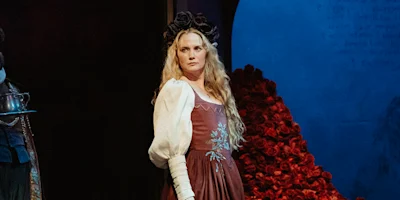
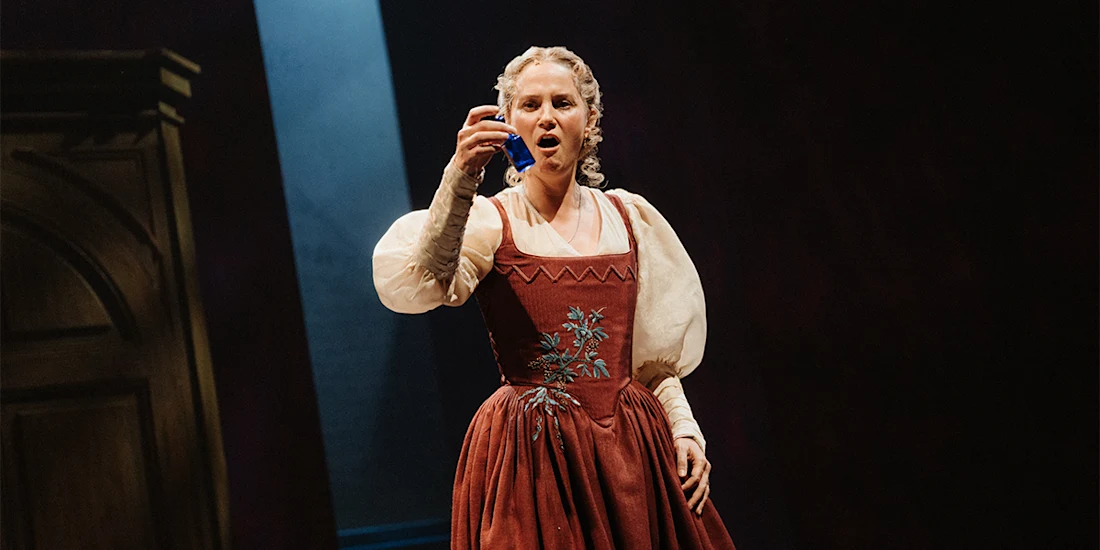
Morally gray heroes are always the most fun, and Nettles plays an effervescent Giulia, which makes her an easy protagonist to root for. But Giulia’s bubbliness never dissipates enough to let you fully believe her gleefully singing about murder. She lacks the tinge of darkness you’d want from someone who (spoiler) ends up plotting to kill the two most powerful men in town: the Cardinale (Quentin Earl Darrington), a commanding presence with a powerful voice, and the Governatore (Christopher M. Ramirez), a delightfully oily politician with impeccable comic timing. The supporting cast, including standouts Naomi Serrano as Giulia’s daughter Vitoria and Didi Romero as the self-interested Duchessa, each have a moment to shine.
Directed by Mary Zimmerman, Giulia has a lot of stunning moving parts. Quite literally, one of these includes the huge three-paneled wooden doors that are constantly opened and closed in each scene. Each time they’re reopened, the scene is reset: sometimes as Giulia’s apothecary, sometimes a confessional booth, sometimes a backdrop of the Mediterranean coastline, and on and on. The effect is transformative, as is the lighting design that takes us through these scene changes. (The sets are by Daniel Ostling; lighting is by T.J. Gerckens.)
Other, more figurative moving parts are harder to appreciate. The opening number introduces a commedia dell’arte theatre troupe who have just arrived in Palermo and are sharing the latest news from the mainland. Bre Jackson leads the number, and the troupe, as a character named La Capitana, but she’s recognizable throughout the show by the checkered diamonds on her costume that mark her as Harlequin, a trickster archetype. She is slick, charismatic, and an excellent anchor for the narrative. But her role in the story is never solidified. She floats around as part-omniscient narrator, part-seer, part-devil on Giulia’s shoulder. It’s too interesting a thread not to pull, but we never get real closure on her place in the story. The commedia dell’arte troupe reappears now and then, donning their distinctive black masks, but their presence in Giulia’s story is also unsatisfying.
Giulia: The Poison Queen of Palermo promises delicious, righteous darkness, like a feminist, Renaissance Sweeney Todd for the 21st century. The songs can’t quite deliver that darkness, though, and at their weakest feel trite and even derivative. But at their strongest, as Giulia and her women sing their woes to a Palermo skyline, there was a visceral emotion being stirred in my audience. And when it came to the finale, Giulia seamlessly stuck a landing that had everyone on my night on their feet, cheering for more.

Giulia: The Poison Queen of Palermo summary
The year is 1653, and a drought hangs over Renaissance-era Palermo. Giulia Tofana runs an apothecary to support her family while her abusive husband is out of work. But when her husband threatens her young daughter Vitoria, Giulia decides to take her life into her own hands. Slowly, she and the women of Palermo realize that Giulia’s secret drug might just be what none of them dared to dream of: an escape from powerlessness. But before too long, the clashing Governatore and Cardinale turn their eyes on the apothecary, and Giulia must make a final stand.
What to expect at Giulia: The Poison Queen of Palermo
While much about the real-life Giulia Tofana isn’t definitively known, her legacy certainly is. Aqua Tofana was a nearly undetectable, slow-acting poison that was purchased by Italian women looking for a way out of abusive and/or nonconsensual marriages in a time when women were legally viewed as their husbands’ property. Historians do agree that Giulia died before she was discovered; however, a small ring of her accomplices were eventually caught and executed for their crimes. But the legend of Aqua Tofana lived on through the centuries, becoming a catch-all term for colorless, tasteless poisons that acted in similar ways (or for similar purposes).
Nettles first became fascinated with Giulia Tofana a decade ago, when she came across the famous poisoner in an article on female serial killers. But the idea of this killer woman with such an allegedly high body count (600, some historians estimate) wasn’t as interesting as her motivation: fighting the patriarchy, to put it in 21st-century speak. Nettles was moved to put Tofana’s story into song, and she ended up writing the score, lyrics, and book for Giulia: The Poison Queen of Palermo.

What audiences are saying about Giulia: The Poison Queen of Palermo
Theatregoers have taken to social media to share thoughts on the new musical, with many users highlighting Nettles’s vocal performance, the rest of the cast, and the intriguing story.
- “The story definitely pulls you in. I thought the singing was really top-notch across most of the characters.” - Reddit user Wonderful-Bother1321
- “This show absolutely blew me away. The costumes, the staging, the vocals, the story all absolutely incredible. Such a beautiful show centered on female empowerment.” - Reddit user Southernguynycii
- “We get the plot points, but…it can feel a bit like we’re being told what’s happening rather than experiencing the characters go through it.” - Reddit user whosthere1989
Who should see Giulia: The Poison Queen of Palermo
- Theatregoers who love historical dramas-turned-musicals, such as the popular Broadway shows Hamilton or Six, will love the upbeat soundtrack and Renaissance-era setting of Giulia.
- Fans of Jennifer Nettles, whether as the lead singer of Sugarland or from her Broadway turns as Jenna in Waitress and Roxie in Chicago, will want to see this musical with Nettles in the lead role.
- Audiences looking for fun choreography can thank Austin McCormick (of the Brooklyn burlesque troupe Company XIV) for the dancing in Giulia, which includes a fascinating slo-mo fight scene, a little tango, and plenty of girl-power moves.
Learn more about Giulia: The Poison Queen of Palermo off Broadway
Gorgeous sets, eye-catching costuming, and a strong cast singing catchy songs make Giulia the queen of the hour, even if the bite of its poison doesn’t quite deliver.
Photo credit: Giulia: The Poison Queen of Palermo off Broadway. (Photos by Andy Henderson)
Originally published on
Latest News
- 1
Jennifer Simard to succeed Ana Gasteyer in 'Schmigadoon!'
- 2
Ruthie Ann Miles, Leslie Rodriguez Kritzer, Zane Phillips, more in 'The Fantasticks' Broadway cast
- 3
Dolly Parton dies at 80
- 4
30 things to do in NYC this month
- 5
Make a day out of 'The Rocky Horror Show' in New York City
- 6
Ilario Grant to star in 'MJ The Musical' on Broadway
- 7
Kenzie Ziegler to join '& Juliet' Broadway cast; Joey Fatone extends run
- 8
Meet the cast of 'School Girls; Or, The African Mean Girls Play' on Broadway
- 9
See photos of Aaron Tveit, Kelsie Watts in 'Moulin Rouge! The Musical' on Broadway
- 10
‘10 Things I Hate About You’ musical, by Lena Dunham and Carly Rae Jepsen, to open on Broadway next summer
Subscribe to our newsletter to unlock exclusive New York theatre updates!
- Get early access to Broadway's newest shows
- Access to exclusive deals and promotions
- Stay in the know about top shows and news on Broadway
- Get updates on shows that are important to you
You can unsubscribe at any time. Privacy Policy