


Photo credit: Susannah Flood and Hari Nef in Pre-Existing Condition off Broadway. (Photos by Austin Ruffer)
How three stars of 'Pre-Existing Condition' bring their own selves to a universally resonant role
Actors Susannah Flood, Hari Nef, and Whitney White discuss tackling the lead role of A in the rotating cast of Marin Ireland's raw drama.
Summary
- Actors Susannah Flood, Hari Nef, and Whitney White discuss playing the lead role of A in the Off-Broadway play Pre-Existing Condition
- The play is set in the aftermath of a domestic violence incident, when A and those around her are trying to process what happened to her
- The 2026 Off-Broadway run cast six performers to play A throughout the run to show that anyone can identify with A's situation
The main character of Marin Ireland's Pre-Existing Condition is known only as A. She's a "deliberate blank slate," as actor Hari Nef put it, with no specified background, home city, or profession. What we do know is that A just suffered an act of intimate partner violence that ended the relationship, and she's trying to figure out what to do next. Anyone could end up in her shoes.
"There are very few things that unite women across time and space. And unfortunately, the topic of this play is something that does," said fellow actor Whitney White. "It should go on forever because that's how long it would take to have representation of every different kind of woman that's experienced violence in her life."
That's the idea behind having a rotating cast play A in director Maria Dizzia's production, now in an encore Off-Broadway run through January 8 after an acclaimed 2024 premiere. Nef currently plays the role, succeeding Lupita Nyong'o, Phillipa Soo, and Susannah Flood; Edie Falco and White are up next.
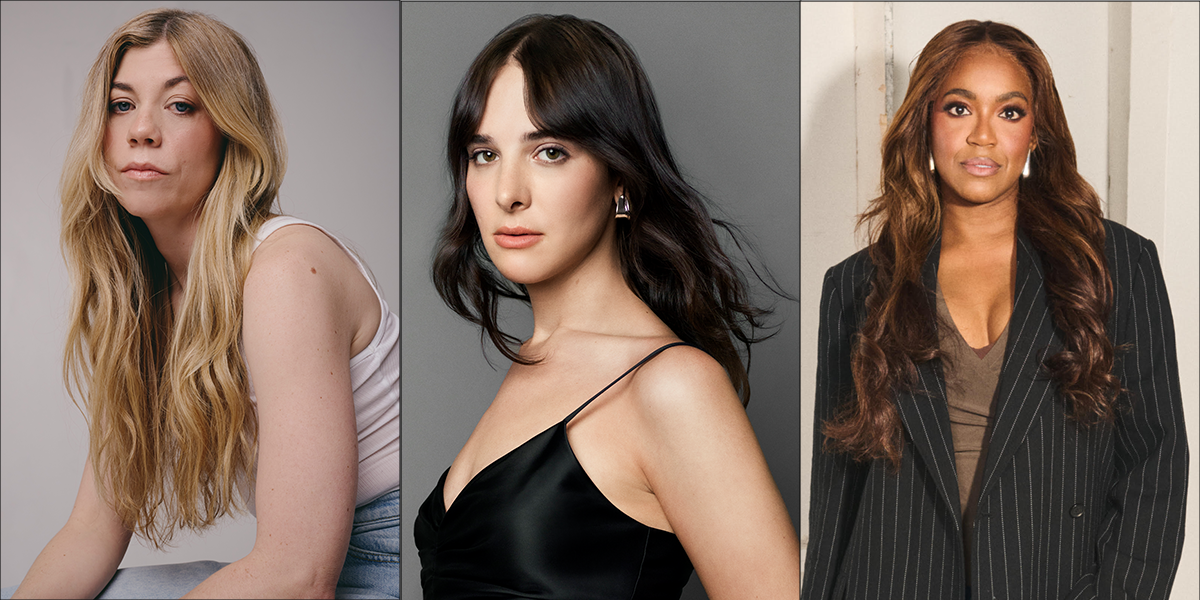
"The play allows for really different people to step into it," Flood said. "There's no way I could go see Lupita or Phillipa or Edie or Hari or Whitney and think I was going to do what they are doing. I feel no defensiveness about, 'Oh, I have to protect my own point of view on this.' They can be freely in conversation with each other."
During a Zoom roundtable with Flood, Nef, and White, a recurring theme was how honest conversation can be unsettling. A — flanked by three other actors each playing a variety of roles known as B, C, and D — discovers this as strangers repeatedly prove more supportive than her own friends and family. “People can't sit with our pain and experiences. It makes people deeply uncomfortable," White said.
"Even people in my life that are supposed to be in that support group, if I call and say, 'Hey, I am at my lowest low in my life,' their response is, 'Okay, let's just go get you a drink. You're going to be okay,' instead of, 'I'm sorry. Let me listen. Let me help you process.'"
But Flood, Nef, and White aren't afraid to get real, which they did in a wide-ranging discussion about tackling the raw, discomforting, and deeply personal challenge of playing A in Pre-Existing Condition. These are edited excerpts from the conversation.
Get Pre-Existing Condition tickets now.
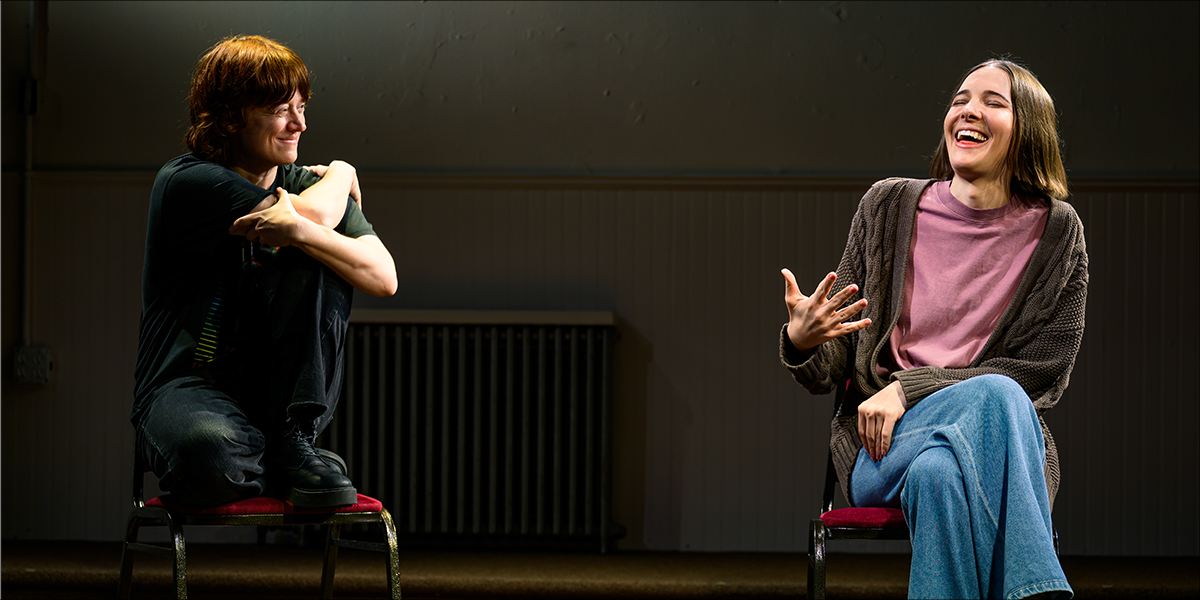
How would each of you describe your approach to A, individually and in conversation with each other?
Hari Nef: What excites me most about the role of A is that it [...] invites a little bit of, "I'm Hari, I'm Whitney, I'm Susannah, and I'm doing this kind of as Hari, Whitney, or Susannah." Inhabiting A is more of a creative, generative process for the actor than other roles.
Susannah Flood: Marin and Maria [have] been very explicit: "You don't want to move there? Don't move there. You want to change the blocking? Change the blocking." [...] But you're really exploring it just with a stage manager, essentially; you don't even have other actors [in rehearsal].
When you finally get the other actors [...] all of a sudden it's a whole new information set, and you're like, "Whoa, I've been developing this way through for myself, and it's being disrupted by the presence of other people, and now I feel behind."
Maria was like, "I'm very interested in that feeling. Anything that comes out of that feeling belongs on stage." This is just another way of saying that yes, there's no hiding. The process is meant to put you in a very raw, unedited way on stage.
Whitney White: I'm thinking about the darkness of laughter a lot. When you're going through a tragedy, the way people try to help you is to try to force you to downplay your opinion on your own tragedy. If they can make you laugh about it or shrug it off, or if they can help you minimize it, there's an assumption that you'll get through the healing faster.
But actually [...] there's clinical studies that [say] you're supposed to acknowledge what you've been through, go through a real grieving process for a period of time, and then you come out healed. [...] It's crazy, the way we force each other to survive without acknowledging what we've been through.
There's a lot of darkly funny beats in the play, to me, when these people are not listening to this girl, and you end up nurturing other people when you're the one who needs to be nurtured.
Flood: There's this very nasty, yucky scene where A goes on a date with an asshole [...] and here's the thing about the scene: A wants to fuck him. Let me put this another way: He behaves badly, and A doesn't immediately say, "That was inappropriate. I am leaving."
The play really can elicit some discomfort because this character isn't always behaving in the way we expect a victim behaves. It's disrupting those expectations. I'm really enjoying leaning into these moments where she does something cringey.
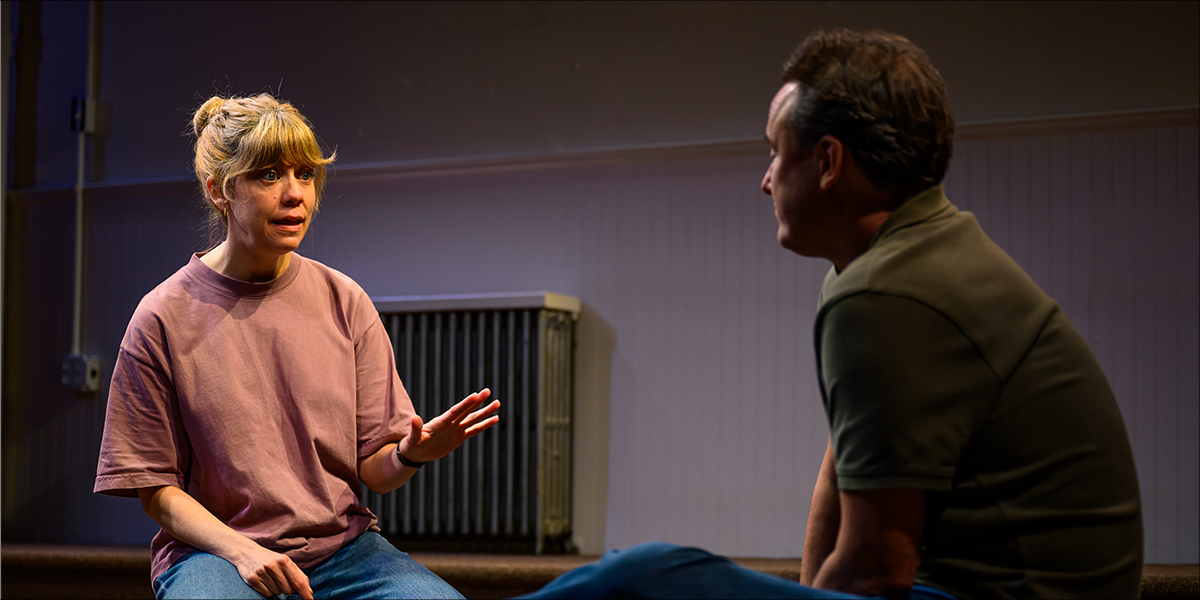
Is it difficult to shake A off when the performance is done?
Flood: The play goes by very quickly, and there is a beginning, middle, and end. To me, it ends with thoughts about fellowship and community that feel like a very useful place to end. It doesn't really cost that much to take it off as I'm walking away because it ends in conversation with other people, and that is a good place to be. I'm not walking away feeling like I'm isolated in my trauma.
How do the other characters shape A's journey?
Nef: There's a dramaturgy document [...] from when they were restaging it at the Greenwich House with Lupita. I believe one of the first things it says was, "Roles B, C, and D are there to get A through this." It's like a Rube Goldberg machine, where it drops her, then it puts her over here, then she rolls down here. They create essential scaffolding to hold and support the actor in that state of disorientation and vulnerability and objection and confusion.
There's something else in that document where it's Marin directly saying, "The transitions between scenes should feel disorienting, and sometimes she's not going to know immediately who she's talking to because that's the nature of trauma." There is a fog and an amnesia and a disorientation, and a week can be collapsed into a conversation, and then three pass, and you're like, "Wait, I was just over there."
White: When something traumatic happens to you, there's people you talk to, there's people that were there, there's people that know both parties, there's doctors. You meet a plethora of people, and they all respond so differently.
What's brilliant about the play is, you experience this lead character and this beautiful brain fog of beings she's forced to process with, or people who don't want to process it with her. It's very realistic to me, the way those other characters and voices are drawn.
Flood: Even people who love you, who are trying to be there for you, if they haven't had that experience, they may not know how. And so they say things that are confusing to you. The power of being able to walk into a room with other people who have had that experience where everyone relates to you...
Nef: A gets her most golden nuggets of affirmation and hope from women in her group therapy whom she doesn't know. It's actually the people she knows that are sending her on this Byzantine, serpentine, hall-of-mirrors gobbledygook of sympathy and antagonism.
White: That is the reason why I wanted to do the play. It's less about my journey, but the portrait of the colleagues around her. What would happen if we let each other process?

Have you gotten any particularly memorable responses, either from audiences or your own network, about the show?
Flood: Research suggests that once you can identify certain behavior patterns in your relationship, you know it's going towards violence. [...] That basically suggests there's this pre-existing condition: an emotional manipulation, a psychological violence that comes from a desire to emotionally enthrall another human being. Physical abuse is just a symptom of a desire to control another person's life.
What's been interesting is that I've had male friends come to the show and be like, "Whoa." Not identification [with the abuser], but that they are like, "Holy shit, I too have been in relationships in which there was emotional control being sought."
It's really easy to dismiss emotional and psychological abuse as a lesser form of abuse when, actually, that violence is the predicate for everything else. And it requires as much care and attention and strength of boundaries and identification and calling out.
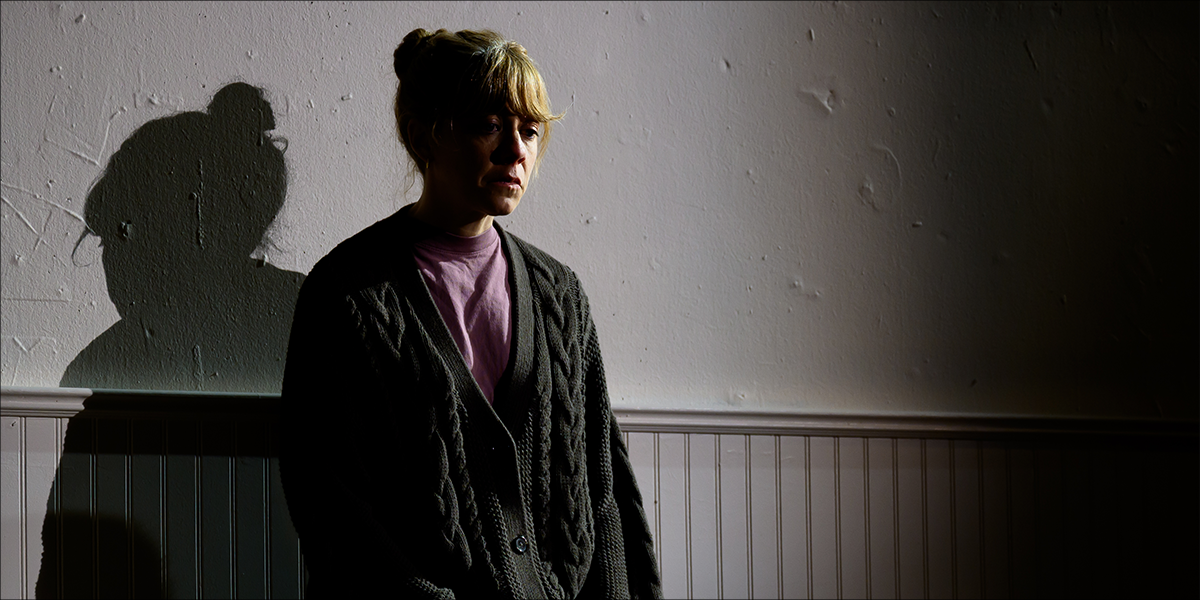
Is there anything Marin, Maria, or the other actors learned from the play's first run that they've imparted to you?
White: My weird answer is no, and I'm so thankful. Susannah and I worked on this play called Liberation, and it's something I really believe in: Let people discover what they discover about the work. Part of the reason why I wanted to take this was the freedom for that. Each one of us is forced to make our own decisions about how we want to play this beautiful, vulnerable thing and then, of course, get in dialogue with the artists who made it.
We have all been sold this picture of what it looks like to encounter violence. And actually, it's very complex and it happens to women so many different ways. We're going to have different understandings of those characters, but it is our different lived experience and presentation that brings this thing home. It happens all the time. It's happening every minute. It happens to everyone. It has happened to some of us on this Zoom.
Flood: Marin said [...] she was interested in decentering A, insofar as she doesn't want that role to be a barn-burner for the actor stepping into this role. She wants that actor to be behind a little bit, and she wants to somehow put on stage the fact that anybody could walk in these shoes.
There's this line in the play about [how] intimate partner violence happens to one in three women. It really is true that this could be any number of people, and the more bodies can disrupt the expectation of what A looks like, the less we give the audience permission to psychoanalyze the character, and the more service we're doing to the topic.
Get Pre-Existing Condition tickets now.
Frequently asked questions
What is Pre-Existing Condition about?
Pre-Existing Condition is a New York Times Critic's Pick play about the end of a relationship — and the start of a fierce new community.
How long is Pre-Existing Condition?
The running time of Pre-Existing Condition is 1hr 15min.
Where is Pre-Existing Condition playing?
Pre-Existing Condition is playing at Greenwich House Theater . The theatre is located at 27 Barrow Street, New York, 10014.
How much do tickets cost for Pre-Existing Condition?
Tickets for Pre-Existing Condition start at $42.
What's the age recommendation for Pre-Existing Condition?
The recommended age for Pre-Existing Condition is Ages 16+..
How do you book tickets for Pre-Existing Condition?
Book tickets for Pre-Existing Condition on New York Theatre Guide.
Is Pre-Existing Condition on Broadway or Off-Broadway?
Pre-Existing Condition is playing Off Broadway.
How long is Pre-Existing Condition running?
Pre-Existing Condition currently has tickets available through 9 January 2027. Check calendar for availability.
Who is in the cast of Pre-Existing Condition?
The cast of Pre-Existing Condition includes Susannah Flood (October 18 - November 7), Hari Nef (November 9-28), Edie Falco (November 30 – December 19), and Whitney White (December 21 - January 8) (alternating as A), Dael Orlandersmith (as B), Susannah Perkins (as C), Greg Keller (as D).
Who directed Pre-Existing Condition?
Pre-Existing Condition is directed by Maria Dizzia.
Who wrote Pre-Existing Condition?
Pre-Existing Condition was written by Marin Ireland.
Originally published on
Latest News
- 1
2026 Macy's Thanksgiving Day Parade postponed
- 2
See photos of Raúl Esparza, Joy Woods, more in 'Galileo' on Broadway
- 3
Mischief Theatre’s ‘The Comedy About Spies’ to open on Broadway this spring
- 4
Quiz: How much Broadway holiday trivia do you know?
- 5
Best Broadway shows in New York in December 2026
- 6
Rosie O'Donnell to return to 'The Rocky Horror Show' on Broadway, succeeding Margaret Cho
- 7
What Broadway show you should see based on your favorite Thanksgiving food
- 8
Shop Black Friday, Cyber Monday theatre ticket sales in 2026
- 9
All the Broadway Black Friday and Cyber Monday theatre ticket deals you can get now
- 10
The best Black Friday and Cyber Monday ticket deals in New York

Subscribe to our newsletter to unlock exclusive New York theatre updates!
- Get early access to Broadway's newest shows
- Access to exclusive deals and promotions
- Stay in the know about top shows and news on Broadway
- Get updates on shows that are important to you
You can unsubscribe at any time. Privacy Policy